
Talent Analytics: Unlocking the Power of Your Workforce Data
Reading Time: 6 minutes
Introduction
The pursuit of excellence for organizations today extends beyond just products and services; it requires a deep understanding of your most valuable asset – your workforce. Talent analytics offers a powerful solution for unlocking the hidden potential within your people data, enabling data-driven decisions that optimize talent management and drive overall business performance.
What is Talent Analytics?
Talent analytics is the strategic application of data science and statistical methods to the human resources (HR) function. It involves collecting, analyzing, and interpreting employee data to gain valuable insights into their skills, performance, and engagement. These insights can inform various HR decisions, from recruitment and onboarding to training and development, retention, and succession planning.
Talent analytics is the strategic application of data science and statistical methods to the human resources (HR) function.
It involves collecting, analyzing, and interpreting employee data to gain valuable insights into their skills, performance, and engagement.
Why is Talent Analytics Important?
Talent analytics is the cornerstone of a data-driven HR strategy. It empowers organizations to move beyond gut feelings and anecdotal evidence, replacing them with concrete data-backed insights. By leveraging talent analytics, you can:
- Uncover Hidden Patterns and Trends: Talent analytics can reveal underlying patterns in employee behavior, performance, and turnover. These insights can be used to identify potential issues before they escalate and to capitalize on emerging opportunities.
- Optimize Resource Allocation: By analyzing workforce data, organizations can identify skill gaps, talent surpluses, and high turnover areas. This information can be used to optimize resource allocation, ensuring that the right people are in the right roles at the right time.
Importance of Talent Analytics
- Uncover Hidden Patterns and Trends
- Optimize Resource Allocation
- Enhance Decision-Making
- Improve Employee Experience
- Align Talent with Business Objectives
- Predict Future Talent Needs
- Measure and Improve Performance
- Drive Innovation
- Enhance Decision-Making: Talent analytics provides the evidence needed to support informed decision-making. Whether determining the ROI of training programs, evaluating recruitment strategies, or justifying budget allocations, data-driven insights are invaluable.
- Improve Employee Experience: By understanding employee sentiment, engagement levels, and career aspirations, organizations can take steps to enhance the employee experience. This leads to increased job satisfaction, higher retention rates, and improved performance.
- Align Talent with Business Objectives: Talent analytics helps align your workforce with the organization's strategic goals. By identifying the skills and competencies needed to achieve business objectives, you can ensure that your talent strategy directly supports the bottom line.
- Predict Future Talent Needs: Talent analytics can forecast future workforce requirements based on historical data, business trends, and industry projections. This enables organizations to build the talent pipeline and avoid skill shortages proactively.
- Measure and Improve Performance: By tracking key performance indicators (KPIs) related to talent management, organizations can measure the effectiveness of their HR initiatives and identify areas for improvement.
- Drive Innovation: Talent analytics can foster a culture of innovation by encouraging data-driven experimentation and learning. Organizations can identify new and better working methods by testing new approaches and measuring their impact.
In today’s competitive business landscape, organizations that can harness the power of their talent data will have a significant advantage. By investing in talent analytics, you can unlock the full potential of your workforce and drive sustainable business growth.
Benefits of Implementing Talent Analytics
Implementing a robust talent analytics program can benefit organizations of all sizes significantly. Here’s a deeper dive into the advantages:
- Improved Talent Acquisition: Talent analytics can help identify the most effective sourcing channels, refine job descriptions, and predict candidate quality. This leads to a faster and more efficient hiring process, reducing time-to-hire and improving the quality of new hires.
- Enhanced Employee Retention: By analyzing employee data, organizations can identify factors contributing to turnover, such as job satisfaction, compensation, and career growth opportunities. This information can be used to implement targeted retention strategies and reduce employee attrition.
- Optimized Workforce Planning: Talent analytics provides insights into future workforce needs, allowing organizations to build the talent pipeline proactively. You can implement effective succession planning and talent development initiatives by anticipating skill gaps and talent shortages.
- Increased Productivity: Organizations can uncover best practices and replicate successful strategies by identifying high-performing employees and teams. Talent analytics can also help identify factors that impact productivity, such as workload, work-life balance, and employee engagement.
Benefits of Implementing Talent Analytics
- Improved Talent Acquisition
- Enhanced Employee Retention
- Optimized Workforce Planning
- Increased Productivity
- Enhanced Diversity, Equity, and Inclusion (DEI)
- Improved Learning and Development
- Enhanced Financial Performance
- Data-Driven Culture
- Enhanced Diversity, Equity, and Inclusion (DEI): Talent analytics can help identify disparities in recruitment, hiring, promotion, and compensation. Organizations can measure progress toward DEI goals by analyzing workforce data and implementing targeted initiatives to create a more inclusive workplace.
- Improved Learning and Development: Talent analytics can help identify skill gaps and training needs, enabling organizations to develop targeted learning programs. By measuring the impact of training initiatives, you can ensure that your development efforts deliver the desired results.
- Enhanced Financial Performance: Talent analytics can help organizations measure HR initiatives' return on investment (ROI), demonstrating the business impact of talent management programs. By aligning talent strategies with business objectives, you can contribute to overall financial performance.
- Data-Driven Culture: Implementing talent analytics fosters a data-driven culture within the organization. HR can become a strategic partner and contribute to the business's overall success by making data-informed decisions.
By harnessing the power of talent analytics, organizations can unlock the full potential of their workforce, drive business growth, and gain a competitive advantage.
Unlocking Your Skills-Based Organization with Spire.AI
Organizations must be agile and adaptable in today’s rapidly changing business environment. One way to achieve this is by transforming into a Skills-Based Organization (SBO). An SBO focuses on identifying, developing, and deploying the skills needed to succeed rather than relying on traditional job titles.
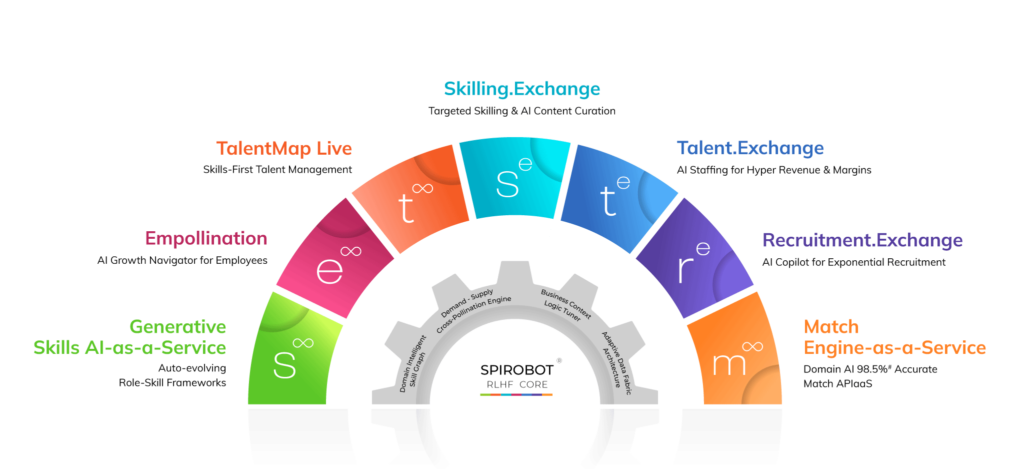
Spire.AI is an industry-leading provider of talent analytics solutions that can help you become a successful SBO. Their full-stack SaaS talent solutions are powered by an AI platform that simplifies and future-proofs how talent is managed within an organization. Here’s a glimpse into how Spire.AI can empower your journey:
- Auto-Evolving Role-Skill Framework - Spire.AI's AI-powered framework automatically identifies and maps complex skill sets required for every role within your organization. This framework is a source of truth for skills data, ensuring consistent and accurate decision-making across HR processes.
- Talent Management for Skills-Based Organizations - Spire.AI helps you build AI-generated employee skill profiles, even with minimal data points. This allows you to identify skill gaps and provide personalized recommendations for upskilling, reskilling, and career path development.
- Talent Marketplace - Spire.AI's talent marketplace facilitates internal mobility by connecting employees with open opportunities that align with their skills and aspirations. This not only improves employee engagement but also reduces recruitment costs.
- Talent Acquisition - Spire.AI utilizes AI to automate various aspects of the recruitment process, including sourcing candidates and matching resumes to job descriptions. This can significantly reduce the time to hire and improve the overall quality of hires.
Real Business Impact for a Global Communications Organization
A global technology and communications industry leader has successfully leveraged Spire.AI’s talent analytics solutions to drive significant business transformation. By adopting a Skills-Based Organization model, this organization has achieved remarkable results:
- Increased internal mobility: Within eight weeks of implementation, internal mobility jumped from 21% to 56%.
- Cost reduction: The organization realized a 20% reduction in IT costs and eliminated the need for external skill framework consulting.
- Enhanced employee development: 87% of employees now have AI-generated skill profiles, empowering them to make informed career decisions and pursue growth opportunities.
The global communications organizational journey highlights the transformative power of talent analytics. By harnessing the insights derived from their workforce data, they have optimized their talent strategy, improved employee satisfaction, and drove overall business performance.
Conclusion
Talent analytics is no longer a luxury; it’s necessary for organizations seeking a competitive edge. By leveraging data-driven insights, you can unlock the full potential of your workforce, optimize talent management processes, and drive business growth.
Spire.AI’s talent analytics solutions offer a powerful platform to support your organization’s transformation into a Skills-Based Organization. By partnering with Spire.AI, you can access cutting-edge AI technology, expert guidance, and a proven track record of success.
Are you ready to unlock the power of your workforce data? Contact Spire.AI today to learn how talent analytics can transform your organization.
Liked this post? Share it on your handles:


