
Closing the Gap, Closing the Deal: How a Talent Gap Analysis Can Improve Your Employee Retention
Reading Time: 6 minutes
Table of Contents
Introduction
Employee turnover is a reality in every business. However, many organizations need to realize the actual costs associated with it. Beyond the immediate expenses of recruitment and onboarding, high turnover disrupts workflows, erodes morale, and hinders long-term growth. Studies show that replacing a lost employee can cost between 16% and 21% of their annual salary. This highlights the importance of prioritizing employee retention.
Let’s delve deeper into the hidden costs of employee turnover and explore how a talent gap analysis can be a powerful tool for bridging the gap and empowering your workforce.
What is a Talent Gap or a Skill Gap?
A talent gap, or skill gap, refers to the discrepancy between your employees’ skills and experience and the skills their role needs to succeed. This gap can arise due to various factors, such as technological advancements, evolving market demands, or a need for more investment in employee development.
When a talent gap exists, employees can experience several negative consequences:
Understanding the Disconnect: How Talent Gaps Lead to Employee Dissatisfaction
- The Desire for Growth and Development: Employees who need more opportunities to learn and develop new skills often feel stagnant and unfulfilled. This can lead to decreased motivation and a desire to seek new challenges elsewhere.
- Feeling Undervalued and Underutilized: Employees may feel undervalued and disengaged if their skillset needs to be fully utilized. A talent gap can prevent employees from contributing their full potential.
- Limited Career Advancement Opportunities: A lack of alignment between employee skills and future company needs can create a roadblock for career advancement. This can be particularly demotivating for ambitious employees.
What is a Talent Gap Analysis?
A talent gap analysis is a systematic process of identifying the skills and experience gaps within your workforce. This analysis helps you understand how your current talent pool aligns with your present and future business needs.
How a Talent Gap Analysis Can Help
By conducting a talent gap analysis, you can gain valuable insights such as
- Identifying Skill Discrepancies Between Roles and Employees: The analysis helps pinpoint specific skill gaps within particular roles, allowing you to tailor development programs accordingly.
- Uncovering Hidden Potential and Untapped Talent: You might discover employees with underutilized skills who could be valuable assets in different roles.
- Assessing Future Skill Needs and Aligning with Employee Development Goals: By anticipating future skill requirements, you can design skill development programs that align with organizational needs and employee aspirations.
From Analysis to Action: Strategies for Addressing Talent Gaps and Boosting Retention
Now that you’ve identified talent gaps within your organization through a talent gap analysis, it’s time to translate insights into action. Here’s a deeper dive into practical strategies to close the gap and keep your top talent:
1. Building Customized Training and Development Programs:
- Go beyond generic: Move away from one-size-fits-all training. Analyze the skill gaps for each role and employee with all-round employee skill profiles and design targeted programs accordingly. This could involve:
- Microlearning modules: Short, focused online courses that address specific skill deficiencies.
- Mentorship programs: Connect experienced employees with those seeking guidance in desired skill areas.
- On-the-job training: Provide opportunities for employees to learn hands-on in real-world scenarios.
- Industry conferences and workshops: Invest in employee participation in relevant industry events for exposure to cutting-edge knowledge.
2. Encouraging Internal Mobility:
- Create personalized career paths: Develop a well-defined career roadmap outlining lateral and vertical internal opportunities for growth for each employee. This fosters a sense of purpose and shows employees a future within the company.
- Invest in internal job postings: Promote internal openings before seeking external candidates. This gives your current talent first dibs on new opportunities and demonstrates your commitment to their growth.
- Skills-based hiring practices: When evaluating internal candidates for new roles, focus on assessing transferable skills and potential. Be flexible about specific experiences if the core skills exist.
- Develop internal talent pools: Identify high-potential employees across departments and create talent pools for specific skill sets. This allows for faster filling of internal positions when needs arise.
3. Career Path Planning Within the Organization:
- Empower employee ownership: Foster a culture of self-directed learning by encouraging employees to take ownership of their career development. Provide resources and tools to help them identify goals and create personalized development plans.
- Regular performance reviews with a growth focus: Move beyond simply evaluating past performance. Use reviews to discuss career aspirations and tailor development plans to bridge identified talent gaps.
- Leadership involvement: Encourage senior leaders to participate actively in employee development. This can involve mentoring, providing career guidance, and advocating for internal talent.
4. Fostering a Culture of Learning and Upskilling
- Provide nudges for learning: Give employees explicit learning matrices that align with internal opportunities. This layout will motivate them to pursue upskilling and reskilling quicker as it leads to a specific end goal.
- Make learning accessible: Acknowledge and appreciate employees' efforts in continuous learning. This can be through public recognition, offering bonuses, or additional paid time off for professional development activities.
- Recognize and reward learning: Acknowledge and appreciate employees' efforts in continuous learning. This can be through public recognition, offering bonuses, or additional paid time off for professional development activities.
- Celebrate learning milestones: Recognize and celebrate employee achievements in their learning journeys. This reinforces the value of continuous learning and motivates others to do the same.
By implementing these strategies, you can address existing talent gaps and create a work environment that fosters continuous learning and growth. This, in turn, leads to a more engaged, motivated, and ultimately, higher-performing workforce with a lower turnover rate.
The Power of AI for Talent Management
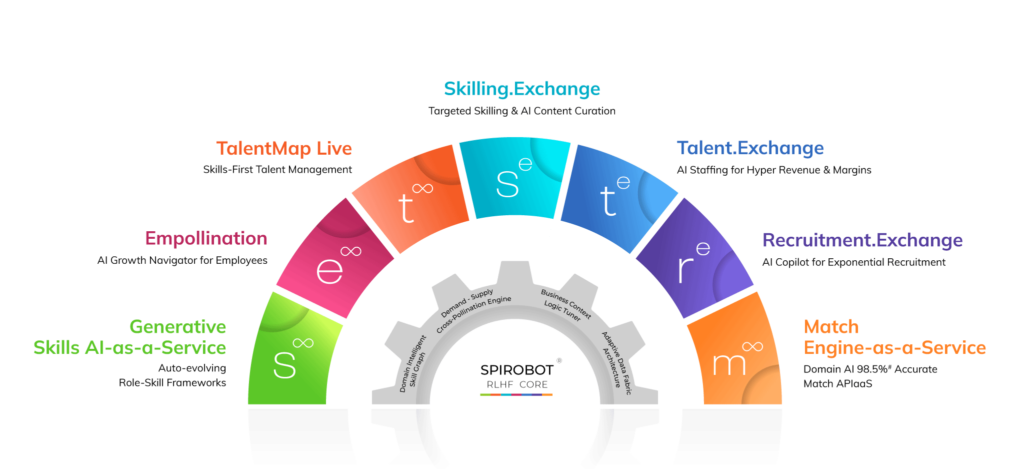
In today’s rapidly evolving business landscape, leveraging AI-powered solutions can significantly enhance talent management efforts. Consider tools like Spire.AI, an AI Copilot for Talent.
Spire.AI simplifies and future-proofs talent management for organizations transforming into Skills-Based Organizations (SBOs). Our full-stack SaaS talent solutions leverage AI to streamline processes like:
- Auto-Evolving Role-Skill Framework: Spire.AI automates creating and maintaining a skills framework, ensuring your skill data is always accurate and up-to-date. This eliminates the need for manual updates and ensures consistency across your organization.
- Talent Management for Skills-Based Organizations: Spire.AI offers a suite of features to empower both employees and HR professionals:
- AI-generated Employee Skill Profiles: Spire.AI can automatically generate skill profiles for a large percentage of your workforce (more than 83%), minimizing manual data entry.
- Career Path Simulation and Reskilling Recommendations: Employees can explore personalized career paths and receive recommendations for upskilling or reskilling based on their aspirations and the company's needs.
- Live Internal Talent Marketplace: Spire.AI facilitates a dynamic internal talent marketplace, connecting employees with suitable growth opportunities.
The Benefits of Spire.AI
By implementing Spire.AI, organizations can expect to see significant improvements in talent management, including:
- Increased internal mobility rates from 21% to 56%.
- Improved employee engagement and satisfaction through personalized development opportunities.
- Reduced costs associated with external recruitment due to a more effective utilization of internal talent.
- Enhanced talent acquisition efforts by attracting candidates who value opportunities for growth and development.
Conclusion: Investing in Your People for Long-Term Success
The Great Resignation isn’t a fad; it’s a wake-up call. Employees today crave growth, development, and a clear path forward. Businesses that prioritize filling talent gaps with generic training and a revolving door of external hires will lose the war for talent.
Addressing talent gaps is no longer a reactive strategy but a proactive necessity for business success. By conducting regular talent gap analysis and implementing targeted development initiatives, you can empower your workforce, foster a learning culture, and ultimately achieve long-term success through a more engaged and retained workforce.
The answer lies within. Invest in your people. Conduct a talent gap analysis to uncover hidden potential and curate personalized development plans. Foster a culture of continuous learning, empower employees to take ownership of their growth, and celebrate their achievements.
But here’s the secret weapon – automation. Leverage AI-powered talent management solutions to streamline the process. Imagine automatically generating skill profiles, recommending personalized learning paths, and facilitating internal mobility through an AI-powered marketplace.
Take action today. Bridge the gap, unleash your people’s potential, and watch your business soar with a loyal, high-performing workforce.
Frequently Asked Questions
What is gap analysis in recruitment?
A gap analysis in recruitment identifies the skills and experience missing in your candidate pool compared to what the job requires.
What is a gap analysis example?
A company needs to hire a social media manager with experience in video editing. If none of the applicants have video editing experience, there's a gap in skills.
What is a talent gap and how to fill the talent gap?
A talent gap is the difference between the skills your employees have and the skills they need for their roles. To fill talent gaps, organizations can invest in training and development of existing employees, recruit from untapped talent pools, and encourage internal mobility.
Liked this post? Share it on your handles:


